
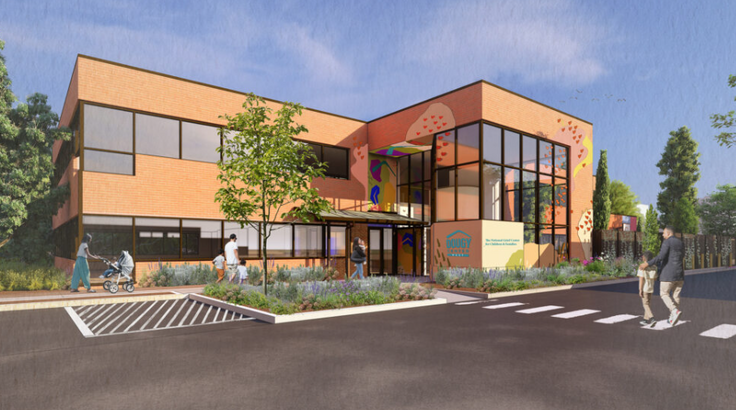
At Cambia Health Foundation, we recently awarded $100,000 to Dougy Center to expand its nationally recognized childhood grief support programs into Beaverton, Ore. The new facility, named Malcolm's House, is expected to open in early 2027.
The impact of grief on overall health
One in 12 children in Oregon will experience the death of a parent or sibling before they turn 18. In some parts of Dougy Center's service area, that number climbs to one in 8. Left unaddressed, childhood grief can have lasting consequences, increasing the risk of chronic disease and affecting mental and social well-being well into adulthood.
Grief is lonely by nature. Children and teens who are grieving often find that friends don't know what to say — and that silence can deepen the isolation, causing young people to pull away from the relationships they need most. Over time, that withdrawal can increase the risk of depression and make healing feel even further out of reach.
"Grief is one of the most disruptive experiences a young person can face,” said Brennan Wood, executive director of Dougy Center. “We're grateful for this investment from Cambia Health Foundation and for their ongoing commitment to helping us reach more children and families affected by loss.”
The need for Dougy Center's services has never been higher. Last year, it served more children and families than ever before in their 43-year history — a 23% increase over the prior year. Yet, even with nearly 100 grief groups running bi-weekly, Dougy Center still doesn’t have the capacity to fill the need.
A community of understanding
What makes Dougy Center's model so powerful isn't just the space — it's the approach. Rather than traditional therapy, children and teens meet in small peer support groups facilitated by trained volunteers, sharing their experiences with others who truly understand what they're going through. Children are invited to show up exactly as they are, and in doing so, discover they’re not alone. It's a model that’s helped inform grief support both nationally and internationally; if you've encountered a childhood grief program anywhere in the country, there's a good chance the people running it were trained by Dougy Center.
In 2025, more than 3,300 children and their families found support through Dougy Center's programs. Since 1982, the organization has served more than 65,000 people — all at no cost to families, for as long as they need it.
Malcolm's House will double Dougy Center's square footage, creating dedicated spaces for art and creative expression, active play and physical outlets for big emotions, theater and performance spaces, small group meeting rooms and more.
Children are matched with grief groups thoughtfully — by age, the relationship to the person who died, and sometimes even the circumstances of the loss — so that every child walks into a room and finds people who get it.
Meeting families where they are
Accessibility is at the heart of this expansion and that means more than just geography. Dougy Center serves the full diversity of the communities around them, with dedicated programs for Spanish-speaking families, Black youth, children in the foster care system and even kids living with a parent facing serious illness, supporting grief that begins before a loss occurs.
Malcolm's House is being designed with these families in mind — with accessible public transportation, parking and a welcoming environment where every child can feel comfortable.
A partnership built over nearly two decades
This $100,000 donation builds on more than $1.1 million invested in Dougy Center’s work at its current location on Portland's east side, in addition to employee board service and volunteerism.
“The death of a parent or sibling is one of the hardest things a child can experience, and they need safe spaces to express themselves as they process unimaginable loss. Our investment in Dougy Center is about early intervention and prevention,” said Peggy Maguire, president of Cambia Health Foundation. “We deeply value our long-standing partnership with Dougy Center, including our most recent investment to help expand Dougy Center’s reach to more families, ensuring that children get the timely support they need to heal and build resilience needed for a healthy life.”
This investment reflects our broader commitment to whole-person health — recognizing that resilience built in childhood shapes the health of individuals, families and entire communities for generations to come.