
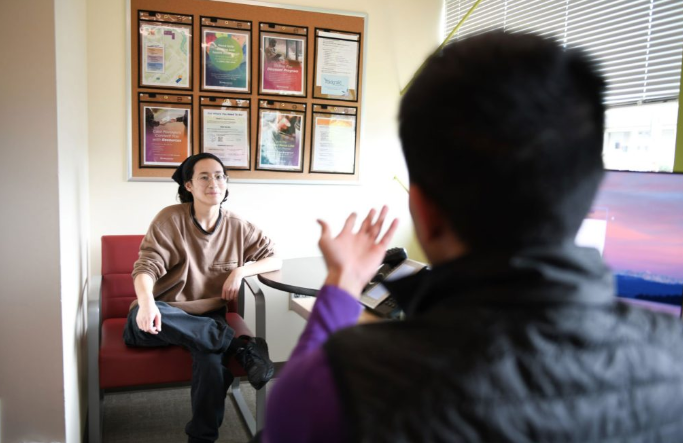
The Way Station in Bellingham, Wash. was designed to change that. Opened in 2024, its Health & Hygiene Center offers showers and laundry services alongside medical and mental health care, including substance use disorder counseling—all without an appointment. Through a partnership with Unity Care NW and local treatment centers, guests can also be referred for additional care when needed.
"We can do anything a primary care visit would do," says Mikel, one of The Way Station's intake coordinators. "At The Way Station, they can be seen within ten minutes — and that's huge."
Before a guest ever sees a doctor or counselor, they meet an intake coordinator. For many guests, that first interaction carries substantial meaning. Some haven't received medical care in years. Others are working, raising families, and navigating housing instability simultaneously—a reality that challenges common assumptions about who experiences homelessness.
Intake coordinators like Mikel are the ones who begin to shift that dynamic. They're the first face a guest sees, and their job is as much about building rapport as it is about logistics. That trust, built at the front desk, is often what makes it possible for someone to finally bring a health concern to a provider—and sometimes, to catch something before it becomes an emergency.
Our investment in fostering connection
A recent grant in our Healthcare Workforce focus area directly supports the intake coordinator position at The Way Station, ensuring that people like Mikel can continue serving as connectors for guests who might otherwise fall through the cracks.
"Every healthy community starts with connection," said Steven Lesky, senior program officer at Cambia Health Foundation. "Intake Coordinators help families and individuals take that first important step toward getting the primary care they need. When people feel seen and supported from the very first interaction, they're more likely to reach out early—and that means fewer emergencies, lower costs, and stronger, healthier communities for all of us."
Evidence supports that view. Integrated primary care—care that addresses physical, behavioral, and social needs together—improves health outcomes and reduces costs for individuals and communities alike. The Way Station is a living example of what that approach looks like in practice.
Read the full article about intake coordinators at The Way Station here. Story is courtesy of Unity Care NW and WhatcomTalk.